Annual vs Monthly at Launch: The Cash-Flow Math Nobody Shows You
- Hold Tight Editorial
- 20 May 2026
Most founders pick a billin
Read MoreUsage-based pricing is great until the buyer takes it to finance. Then a deal that felt closed stalls for a month, because procurement cannot approve a number they cannot predict. The product team loves "pay for what you use." The CFO hears "sign a blank check." Both are right, and the gap between them is where deals go to die.
Here is how to keep the value alignment of usage pricing without spooking the people who actually sign.
Enterprise budgets are set months in advance, and fixed contracts make approvals simple. Pure usage pricing breaks that, because buyers cannot estimate usage accurately enough to commit a budget. The objection is never "this is too expensive." It is "I cannot predict this, so I cannot approve it." Solve for predictability and the deal moves.
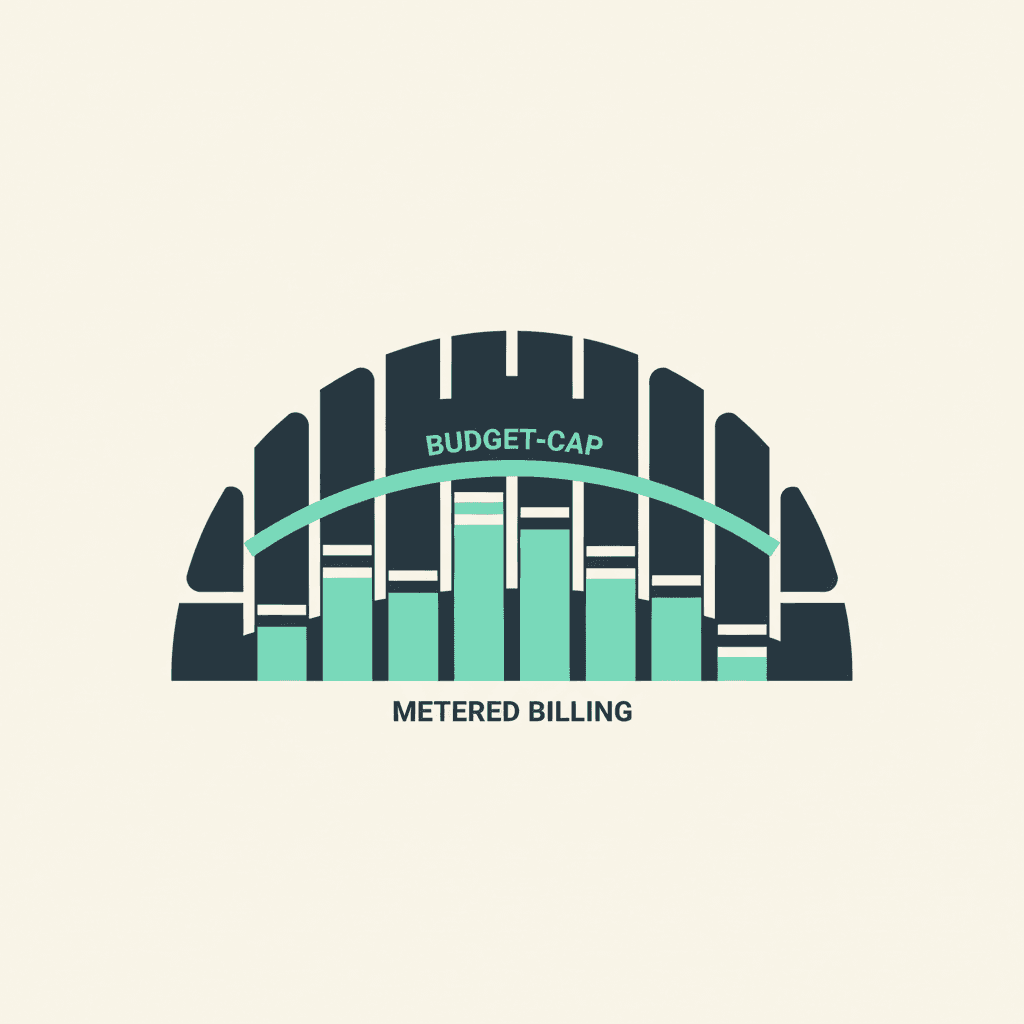
The model that gets approved is a base plus a variable. The buyer pays a committed subscription for guaranteed access or a block of usage, plus a metered charge that scales with value beyond that. As Bessemer's pricing playbook notes, most enterprise software is converging on exactly this: a predictable floor tied to the value metric that matters, with upside that grows as the customer gets more value.
This gives finance a number to budget against and gives you the expansion that pure seats never deliver.
Frame it for two audiences in one breath. To the user: "you only pay for the value you get." To finance: "you commit a predictable base, you set a cap, and here is exactly what your bill looks like at three usage levels." When you walk in with the simulation and the cap already built, you have answered the objection before it is raised, and you have made yourself easier to buy than to explain internally, which is the real bar.
Usage pricing wins when it aligns cost to value. It closes when finance can sleep at night. Build the floor and the cap, and you get both.
Related: pricing a private beta and the waitlist-to-revenue sequence.
Most founders pick a billin
Read MoreThe most expensive mistake
Read MoreYour pricing page is the hi
Read More